
Dr Mohan Arianayagam is a urologist in Sydney with rooms in Bella Vista, Penrith and Windsor. Call 1300 307 990 or send your referral.
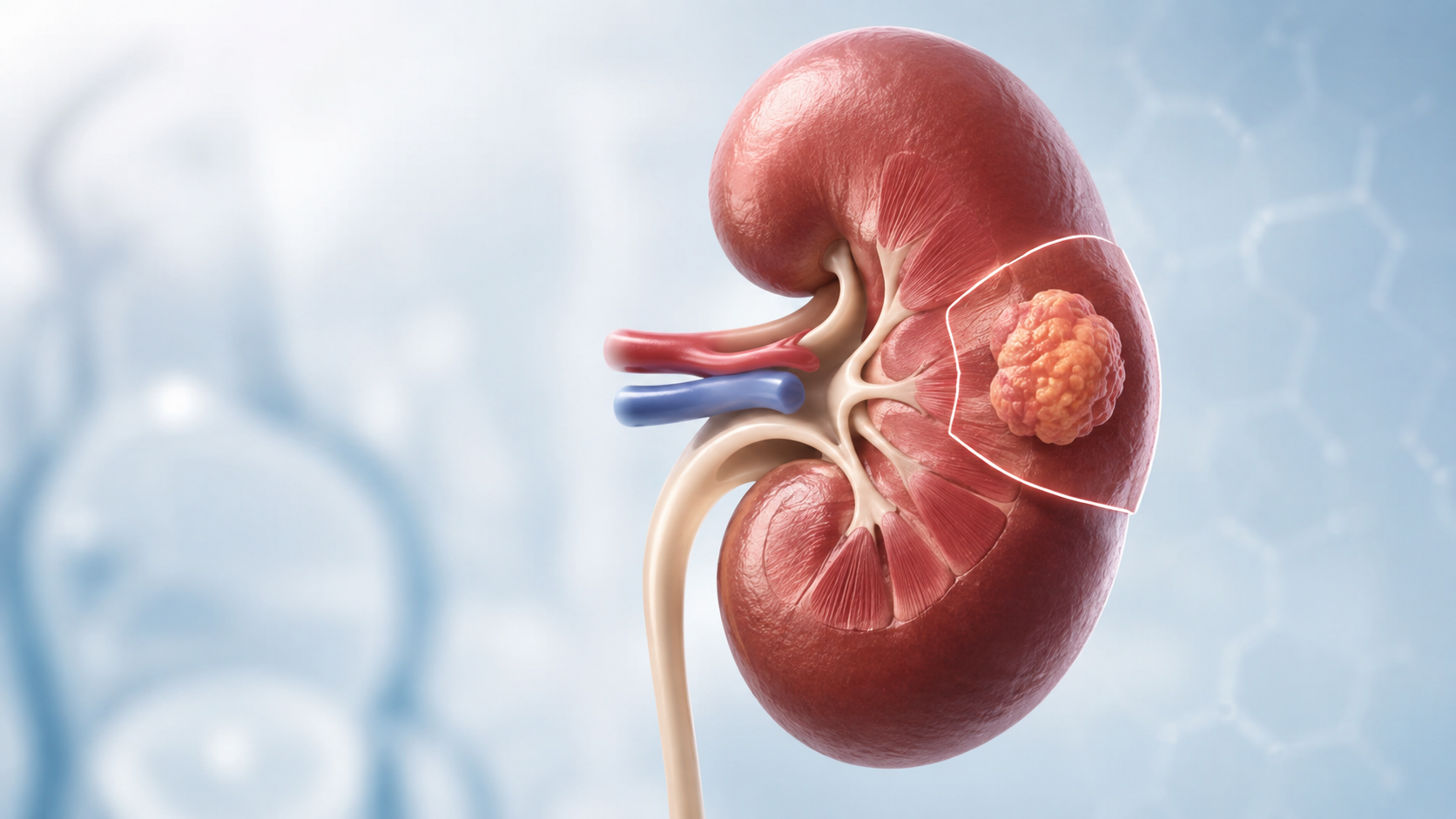
A partial nephrectomy is an operation to remove a tumour or diseased section of the kidney while preserving as much healthy kidney tissue as possible.
Also known as kidney-sparing or nephron-sparing surgery, partial nephrectomy is commonly used to treat localised kidney tumours when the affected tissue can be safely removed without taking out the entire kidney.
For patients considering partial nephrectomy in Sydney, treatment may be performed using open, laparoscopic or robot-assisted surgery, depending on the tumour, kidney function and individual circumstances.
For many smaller kidney cancers, preserving healthy kidney tissue is preferred when it can be done safely. Current European Association of Urology (EAU) guidelines recommend partial nephrectomy for T1 kidney tumours, which are tumours measuring up to 7cm and confined to the kidney.
The most appropriate operation depends on several factors, including the size and location of the tumour, existing kidney function, the patient’s overall health and the complexity of the surgery.
What is a partial nephrectomy?
The term nephrectomy means surgery to remove all or part of a kidney. A partial nephrectomy removes a tumour or diseased section of the kidney while preserving as much healthy kidney tissue as possible.
Also known as kidney-sparing or nephron-sparing surgery, partial nephrectomy is commonly used to treat localised kidney tumours when the affected tissue can be safely removed without taking out the entire kidney.
A radical nephrectomy, by comparison, removes the entire affected kidney.
When is partial nephrectomy recommended?
Partial nephrectomy is particularly important in the treatment of smaller, localised kidney tumours.
Current clinical guidelines recommend partial nephrectomy for T1 kidney tumours when technically feasible. It may also be considered for some larger tumours in people with a single functioning kidney or chronic kidney disease where preserving kidney tissue is especially important.
Whether a partial nephrectomy is suitable depends on more than tumour size alone.
The surgeon will consider:
- where the tumour is located
- how deeply it extends into the kidney
- its proximity to major blood vessels and the kidney’s drainage system
- the amount of healthy kidney tissue that can be preserved
- how well both kidneys are functioning
- whether other medical conditions affect kidney function.
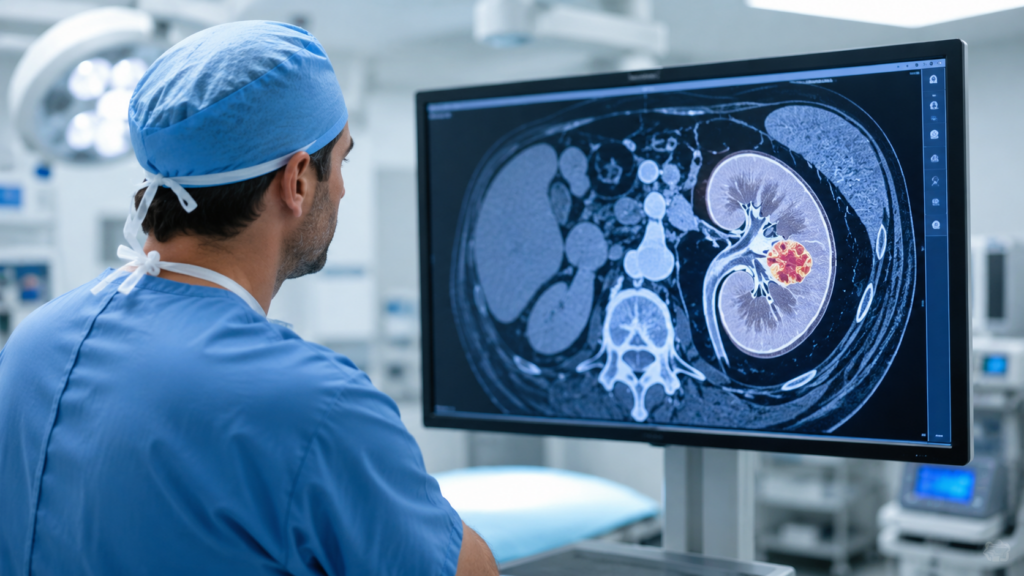
CT, MRI and other imaging can help the surgeon assess the tumour and determine whether partial or complete nephrectomy is the most appropriate approach.
Why preserve part of the kidney?
Most people have two kidneys, which filter waste and excess fluid from the blood, produce urine and help regulate important functions including blood pressure and mineral balance.
Although a person can generally live with one healthy kidney, preserving healthy kidney tissue where possible can help maintain overall kidney function.
This may be especially important for people who already have reduced kidney function, have only one functioning kidney or have conditions that increase their risk of kidney disease in the future.
For T1 kidney cancers, current EAU evidence indicates that partial and radical nephrectomy provide comparable overall cancer outcomes, supporting kidney-preserving surgery when it can be performed safely.
How is a partial nephrectomy performed?
Partial nephrectomy is performed in hospital under general anaesthesia.
The operation can be carried out using open, laparoscopic or robot-assisted surgery.
Open partial nephrectomy
During open surgery, the surgeon accesses the kidney through a larger incision in the abdomen or side.
Open surgery remains an important option, particularly for complex tumours or circumstances where direct access to the kidney provides the safest surgical approach.
Laparoscopic partial nephrectomy
Laparoscopic surgery uses several smaller incisions rather than one large incision.
A camera and specialised instruments are inserted through these openings, allowing the surgeon to operate while viewing the kidney on a monitor.
Robotic partial nephrectomy
Robot-assisted partial nephrectomy is another form of minimally invasive surgery.
The surgeon controls robotic instruments from a console while viewing a magnified three-dimensional image of the surgical area.
Importantly, the robot does not perform the operation independently. Every movement of the surgical instruments is controlled by the surgeon.
What is robotic partial nephrectomy?
Robotic technology can be particularly useful during partial nephrectomy because the operation involves more than simply removing a tumour.
The surgeon needs to carefully separate the tumour from healthy tissue, control bleeding and reconstruct the remaining kidney while preserving as much functioning tissue as possible.
The robotic system provides a magnified view and highly manoeuvrable instruments, which can assist with precise dissection and reconstruction.
Because robotic surgery is performed through several small incisions, it may also provide some of the general benefits associated with minimally invasive surgery, including a shorter initial recovery compared with traditional open surgery in appropriately selected patients.
However, robotic surgery is not automatically the best option for every patient.
The tumour’s size and position, the patient’s anatomy and health, and the surgeon’s experience all play a role in deciding which technique is most appropriate.
Current clinical guidance recommends against using a minimally invasive approach where doing so could compromise cancer control, kidney function or the safety of the operation.
Partial nephrectomy vs radical nephrectomy
For many patients with a kidney tumour, one of the central questions is whether the tumour can be removed without removing the entire kidney.
A partial nephrectomy removes the tumour and preserves healthy kidney tissue.
A radical nephrectomy removes the whole affected kidney.
Radical nephrectomy remains an important treatment and may be recommended when a tumour is too large or complex to remove safely while leaving functioning kidney tissue behind.
For T1 tumours where partial nephrectomy is feasible, current EAU guidelines favour kidney-sparing surgery rather than removing the entire kidney. For larger localised tumours that cannot be treated with partial nephrectomy, radical nephrectomy may be recommended.
The amount of kidney being removed and the surgical technique used to remove it are separate decisions. Both partial and radical nephrectomy may be performed using open, laparoscopic or robotic techniques depending on the circumstances.
What are the risks of partial nephrectomy?
Partial nephrectomy is a well-established procedure, but it is still major surgery and complications can occur.
Possible risks include:
- bleeding
- infection
- blood clots
- complications related to general anaesthesia
- injury to nearby organs or blood vessels
- chest infection
- urine leakage from the operated kidney
- reduced kidney function
- the need for additional treatment or surgery.
Partial nephrectomy can be technically more complex than removing the entire kidney because the remaining portion of the kidney must continue to function after the tumour has been removed.
In some cases, it may become clear during surgery that safely preserving the kidney is not possible. Where this is considered a possibility, the surgeon should discuss the potential need to proceed to a radical nephrectomy before the operation.
Individual risks vary depending on the tumour, surgical approach and patient’s overall health.
What happens after partial nephrectomy?
After surgery, patients are monitored while recovering from the anaesthetic and operation.
Kidney function, blood pressure, fluid balance and urine output may all be monitored.
A urinary catheter is commonly used for a short period after surgery, and some patients may also require a temporary surgical drain.
Pain and discomfort around the surgical area are expected during the early stages of recovery.
Patients will usually be encouraged to begin moving as soon as it is safe. Gentle movement can help reduce the risk of complications such as blood clots, while breathing exercises may be used to help reduce the risk of chest problems after surgery.
Partial nephrectomy recovery: how long does it take?
Recovery after partial nephrectomy varies considerably from person to person.
The surgical technique makes a difference. Patients undergoing laparoscopic or robotic surgery will often experience a shorter initial recovery than those undergoing open surgery, although the complexity of the operation and the patient’s general health are also important factors.
Hospital stays after kidney surgery can range from a short stay following uncomplicated minimally invasive surgery to several days for more complex procedures.
Once home, light walking and gentle activity are generally encouraged.
Heavy lifting, strenuous exercise and physically demanding work should be avoided until the surgical team advises that it is safe to resume them.
There is no single recovery timeline that applies to everybody, so patients should follow the specific instructions given by their surgeon.
What happens to the kidney after a partial nephrectomy?
One of the main benefits of partial nephrectomy is that the healthy portion of the affected kidney remains in the body and continues functioning.
Kidney function may be checked using blood and urine tests following surgery and during longer-term follow-up.
Patients treated for kidney cancer may also undergo ongoing imaging or other follow-up depending on the original tumour and their individual risk of recurrence.
Maintaining healthy blood pressure is particularly important for long-term kidney health, as high blood pressure can damage the blood vessels within the kidneys.
What if the whole kidney needs to be removed?
If partial nephrectomy cannot be performed safely, a radical nephrectomy may be recommended instead.
Most people can live full and healthy lives with one functioning kidney. However, kidney function and blood pressure may need to be monitored over time.
Removing the whole kidney may be the safer option when the tumour involves a large portion of the kidney, is located close to important structures or when attempting partial nephrectomy could compromise cancer treatment or surgical safety.
The decision is made individually after reviewing imaging, kidney function and the overall clinical picture.
What is life expectancy after partial nephrectomy?
For people who have undergone partial nephrectomy for a localised kidney tumour, life expectancy depends on several factors, including the type and stage of the tumour, whether it has spread, overall health and kidney function.
For appropriately selected T1 kidney cancers, partial nephrectomy provides effective cancer control while preserving functioning kidney tissue. Preserving kidney function can be particularly valuable over the long term, especially for people who have other risk factors for chronic kidney disease.
There is no single life expectancy that applies to everyone after partial nephrectomy. Your urologist can provide a more individualised outlook based on the pathology results, tumour stage and your health following surgery.
Partial nephrectomy in Sydney with Dr Mohan Arianayagam
Dr Mohan Arianayagam is a Sydney urologic surgeon with experience in robotic, laparoscopic and open kidney surgery, including robotic partial nephrectomy in Sydney. His current listed procedures include both partial and radical nephrectomy using open and robotic techniques.
Patients looking for a partial nephrectomy surgeon in Sydney may be assessed to determine whether kidney-sparing surgery is appropriate based on tumour size and location, kidney function, imaging and overall health.
Following his urology training in New South Wales, Dr Arianayagam completed a two-year Urologic Oncology Fellowship at the University of Miami Miller School of Medicine, where he undertook further training in robotic cancer surgery.
If you have further questions about partial nephrectomy, kidney cancer surgery or urological health, or would like to book an appointment in Sydney, please feel free to call.